Perfect Sandcastle Sand
Discover why Carpinteria's unique shoreline composition makes it a world-class destination for building epic sandcastles and family memories.
The Science of the Perfect Sand
If you've ever tried to build a sandcastle on a beach where the sand is too coarse, too dry, or filled with broken shells, you know that the medium matters. Building a great sandcastle requires a specific type of sand, and Carpinteria is naturally blessed with an abundance of it. The secret lies in the geological makeup and the tidal patterns of this specific stretch of the California coast.
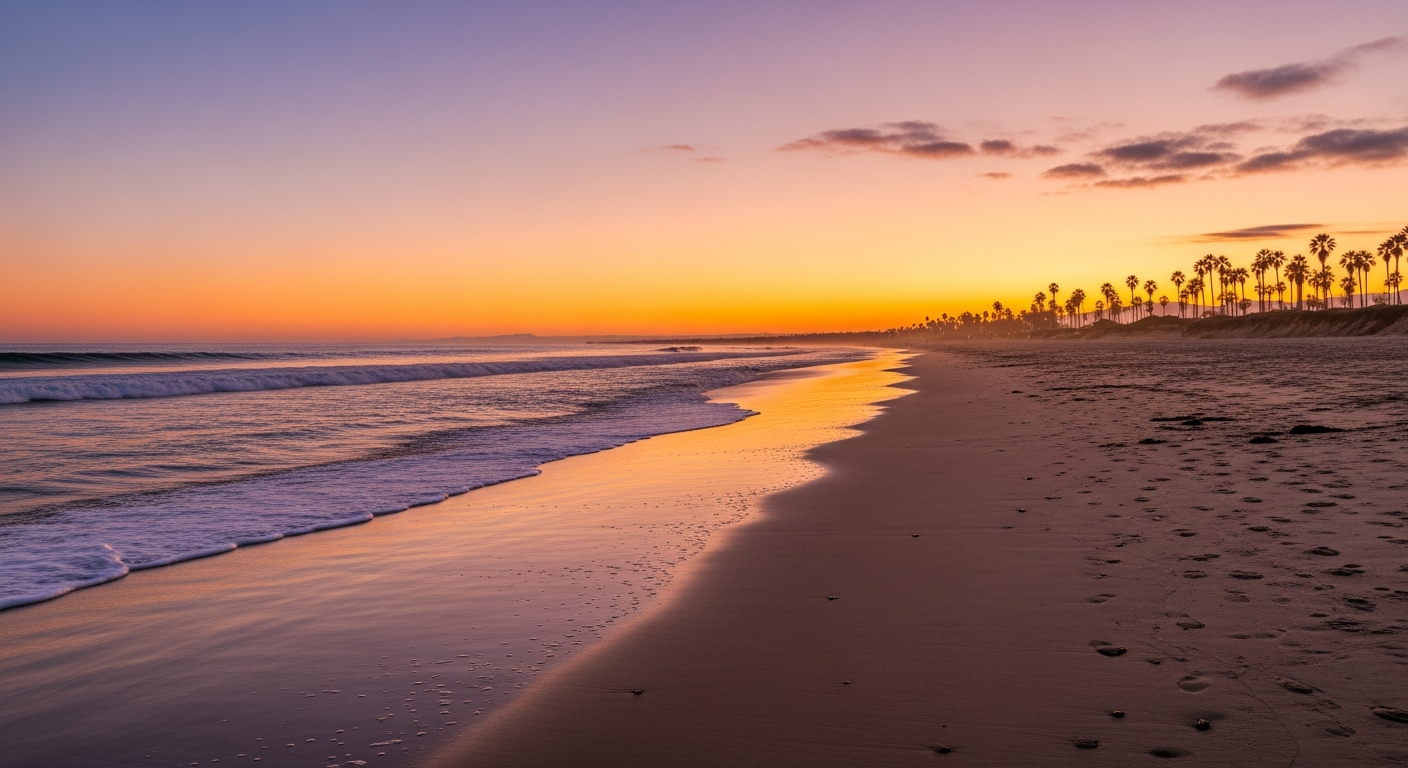
The sand at Carpinteria State Beach and City Beach is incredibly fine-grained. Over millennia, the sediment washed down from the Santa Ynez Mountains has been pulverized by the gentle, rolling surf of the protected channel into a powdery consistency. When mixed with the right amount of seawater, this fine silica acts almost like clay. It packs tightly, holds sharp edges, and allows for structural integrity that coarser sand simply cannot support.
Furthermore, the wide, flat slope of the beach means that the intertidal zone—the area between high and low tide—is vast. This zone provides an endless supply of perfectly pre-moistened sand. You don't have to carry heavy buckets of water up steep dunes; the ideal building material is waiting right at your feet, refreshed twice a day by the ocean.
A Family Tradition
Building sandcastles is more than just child's play in Carpinteria; it's a multi-generational tradition. Walk down the beach on any given summer afternoon, and you'll see elaborate fortresses, winding moats, and detailed sculptures being constructed by families working together. It is an activity that bridges age gaps, requiring teamwork, creativity, and a little bit of engineering.
The safety of Carpinteria's beach plays a huge role in this. Because the surf is generally calm and the slope is gentle, parents can relax and focus on building alongside their children without constantly worrying about rogue waves or strong undertows sweeping away their creations—or their kids. You can build relatively close to the water's edge, allowing you to easily dig moats that fill with the incoming tide, a favorite feature for any young architect.
Many families return to the exact same spot year after year, armed with specialized tools, aiming to build something bigger and better than their previous vacation. It's a low-cost, high-reward activity that keeps kids engaged for hours, completely disconnected from screens and fully immersed in the natural environment.
Pro Tips for Epic Castles
If you want to graduate from simple bucket-molds to towering spires and arches, you need to master the fundamentals of sand sculpture. The golden rule is the water-to-sand ratio. Professional sand sculptors recommend a mixture of about one part water to eight parts sand. In Carpinteria, the wet sand found just below the high tide line usually has this perfect ratio naturally.
Start by building a solid foundation. Pile up a large mound of wet sand and pack it down tightly with your hands or a shovel. This process, known as "pounding," removes air pockets and compresses the sand grains together. Without a dense, packed base, your taller structures will eventually collapse under their own weight.
Leave the plastic buckets behind for shaping. Instead, use the "pancake" or "hand-stacking" method. Take very wet, sloppy sand and slap it down in layers, allowing the water to drain out and the sand to settle into a solid mass. Once you have a rough tower, use tools like plastic knives, spatulas, or even a credit card to carve away the excess sand and create sharp, detailed features like windows, stairs, and battlements. Always carve from the top down so the loose sand doesn't ruin your finished work below.
The Fleeting Art Form
Part of the beauty of building sandcastles is the inherent impermanence of the art. No matter how large, detailed, or magnificent your creation is, the ocean will eventually reclaim it. Watching the incoming tide slowly fill the moats, erode the walls, and finally wash away the highest tower is a lesson in letting go.
In Carpinteria, the tidal shifts are gentle, meaning the destruction of your castle is usually a slow, fascinating process rather than a sudden obliteration by a crashing wave. Kids often spend as much time trying to defend their castles from the rising water—building emergency dams and redirecting water flow—as they did building them in the first place.
Before the tide takes it, be sure to snap a photo. The contrast of a well-built sandcastle against the backdrop of the Channel Islands and the sparkling Pacific makes for a quintessential California vacation memory.
Plan Your Family Beach Day
Sandcastle building is a highlight for families visiting Carpinteria. The best sand is at Carpinteria State Beach. Check tide times for the ideal wet sand window. See more beaches in Carpinteria.